
Ask any publican in Ireland what separates a good bar from a great one and the answer will almost always start with the pint. Not the decor, not the menu, not the location. The pint. Because a beautifully poured stout is the single most visible sign that a pub takes its craft seriously. And despite what some might think, there is genuine science and skill behind every perfect pour.
The Two-Part Pour
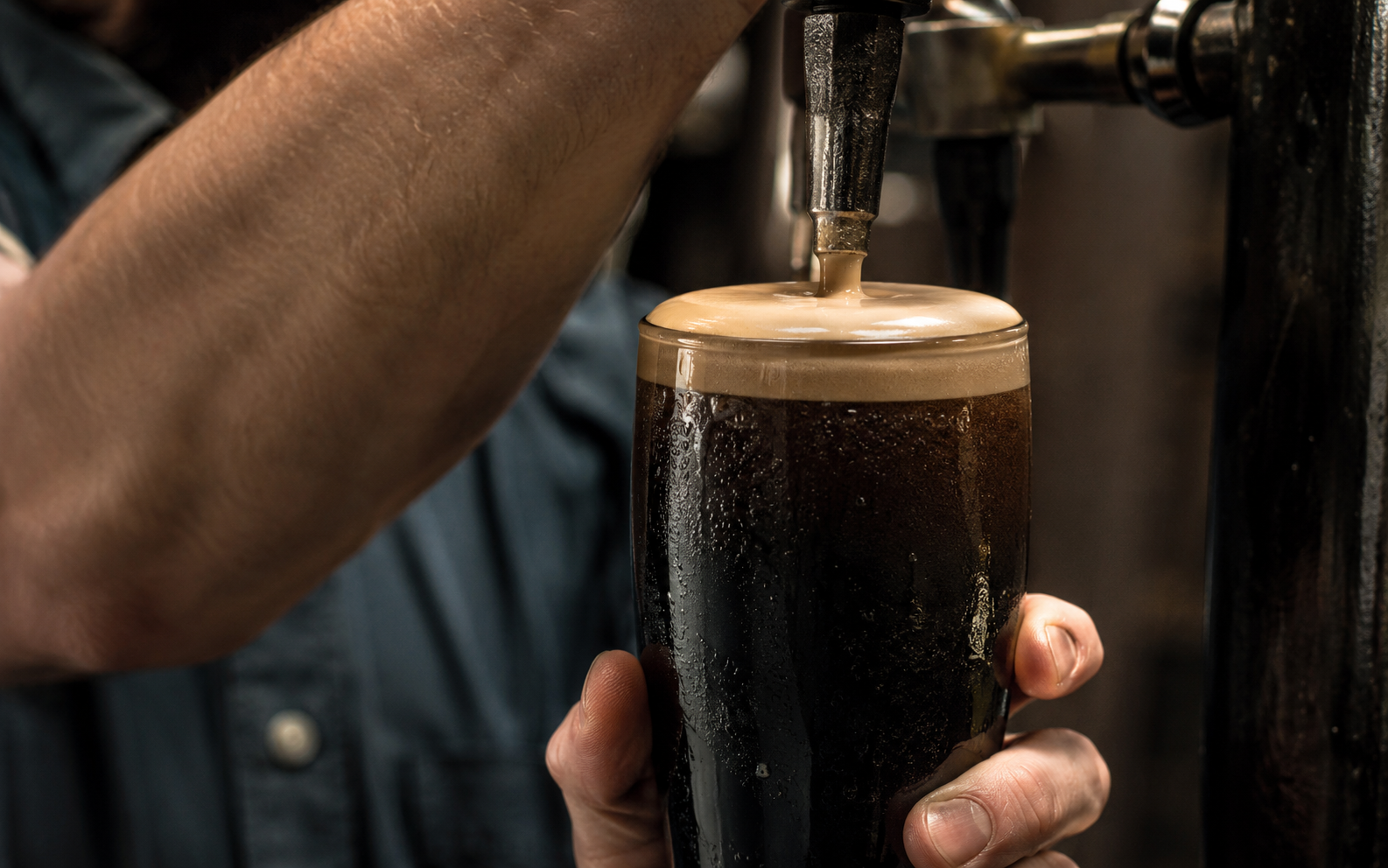
The famous two-part pour of Guinness is perhaps the most recognisable ritual in the drinking world. Hold the glass at a forty-five degree angle, pull the tap forward and fill to roughly three-quarters. Then set it down and wait. The surge of nitrogen bubbles cascades downward through the glass, creating that mesmerising waterfall effect as the stout separates into a dark body and a creamy white head. After about ninety seconds, when the surge has settled, push the tap backward and top it off with a slow, steady dome of cream.
This is not theatre for the sake of theatre. The two-part pour exists because nitrogen-charged stout behaves differently from carbonated beer. The pause allows the gas to settle properly, creating a denser, creamier head that insulates the beer and improves the mouthfeel of every sip. Rush it and you get a flat, lifeless pint with a thin head that disappears in seconds.
Clean Lines and Cold Glass
Before a single drop is poured, the quality of a pint is determined by what happens behind the scenes. Beer lines need to be cleaned regularly, at minimum once a week, to prevent the buildup of yeast and bacteria that can give stout a sour, off taste. The temperature of the cellar and the gas pressure in the system must be calibrated precisely. Too warm and the beer foams uncontrollably. Too cold and the flavour dulls.
The glass matters too. A properly clean glass has no residue from detergent or grease, which would kill the head before it forms. Many pubs rinse glasses in cold water immediately before pouring to ensure a clean surface and a cold start. These are small details, invisible to most customers, but they are the foundation of everything that follows.
Reading the Pint
Experienced drinkers can tell a lot about a pub from a single pint. The head should be tight and creamy, roughly half an inch thick, and it should cling to the inside of the glass as you drink, leaving rings of lace with each sip. If the head collapses quickly or the lacing is absent, something is off. Either the lines are dirty, the gas balance is wrong, or the keg has been sitting too long.
The colour should be a deep, dark ruby when held to the light, not a flat black. The first sip should be smooth and slightly bitter, with a roasted malt character that finishes clean. If it tastes metallic, vinegary or overly sweet, the problem is almost certainly in the system rather than the recipe.
Why It Matters
Some might argue that obsessing over the pour is pretentious, that beer is beer and it all ends up in the same place. But the ritual of the perfect pint serves a purpose beyond flavour. It slows things down. In a world that is increasingly designed for speed and convenience, the two-minute wait for a proper stout is a small act of resistance. It says that some things are worth doing properly, even if it takes a little longer.
The best bartenders understand this instinctively. They do not rush. They do not cut corners. They treat every pint as though it is being watched by someone who knows the difference. And more often than not, it is. Because in a great pub, the regulars are always paying attention.