
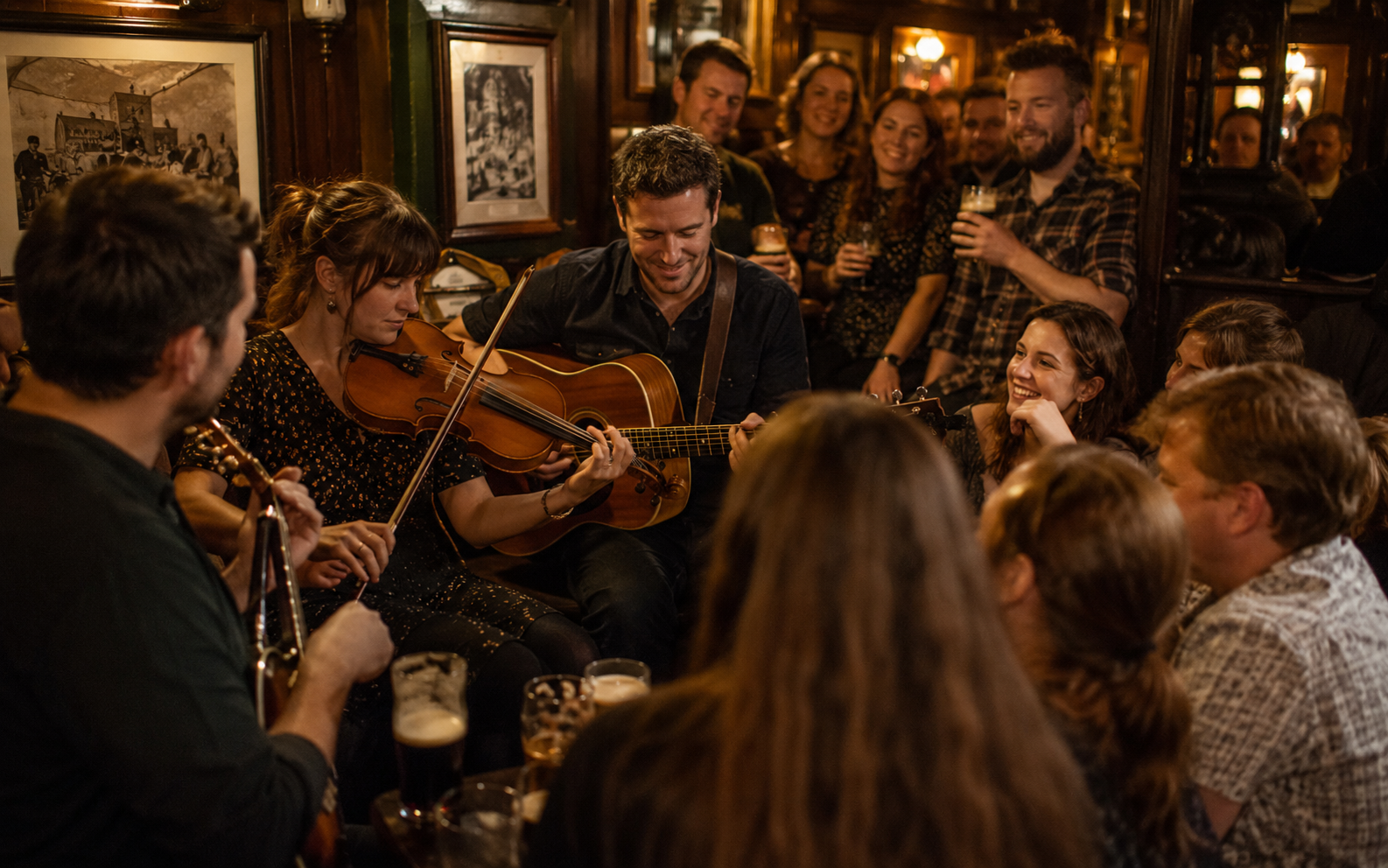
There is no stage. No ticket booth. No velvet rope. Just a corner of the pub, a couple of chairs pushed together, and three or four musicians who showed up because it is Tuesday and that is when the session happens. This is the Irish pub session, one of the most enduring and least understood musical traditions in the world. It is also one of the things that makes the Irish pub unlike any other drinking establishment on earth.
What Is a Session?
A session, or seisiun in Irish, is an informal gathering of musicians who play traditional Irish music in a pub setting. There is no setlist, no rehearsal and no audience in the conventional sense. The musicians sit in a circle, someone starts a tune, and the others join in if they know it. Reels follow jigs, jigs follow hornpipes, and songs emerge when the mood is right. The whole thing is held together by an unwritten code of etiquette that has been passed down through generations.
The beauty of the session is its spontaneity. You never know exactly what you are going to hear. A fiddle player might introduce a tune learned from a recording made in the 1920s. A flute player might respond with a variation picked up in a pub in Clare last weekend. The music is alive, constantly evolving, and rooted in a tradition that stretches back centuries.
The Pub as a Venue
Traditional Irish music and the pub have been inseparable for as long as anyone can remember. Before concert halls and recording studios, the pub was where music happened. It was the village stage, the community jukebox, the place where young musicians learned their craft by sitting beside older players and absorbing the tunes by ear.
The physical space of the pub shapes the music in important ways. The low ceilings and small rooms of a traditional Irish bar create a natural acoustic that suits unamplified instruments. The proximity of the audience, who are really just other drinkers, creates an intimacy that no concert venue can match. You are not watching a performance. You are sitting in the same room while music happens around you.
The Session Abroad
One of the remarkable things about the Irish session is how successfully it has been exported. In cities from New York to Melbourne, regular sessions take place in Irish pubs every week, often featuring a mix of Irish musicians and local players who have fallen in love with the tradition. These sessions serve as cultural anchors for Irish communities abroad and as gateways for locals who want to connect with the music.
The quality varies enormously. Some sessions abroad are polished and professional, featuring musicians who could fill a concert hall but choose to play in a pub because that is where the music belongs. Others are more casual, open to beginners and focused on the social aspect as much as the musical one. Both have value. The session has never been about perfection. It is about participation.
Keeping the Tradition Alive
There is a concern among some traditionalists that the pub session is under threat. Rising rents are forcing pubs to close. Noise complaints from new residents in gentrifying neighbourhoods are making it harder to host live music. And a younger generation, raised on streaming playlists, may not see the appeal of sitting in a pub listening to tunes played on instruments they cannot name.
But the session has survived worse. It survived centuries of colonialism, decades of emigration, and the near-death of the Irish language. It survived because it is not a product or a performance. It is a practice. As long as there are musicians who want to play and pubs willing to let them, the session will endure. And the pub will remain what it has always been: the home of the music.