
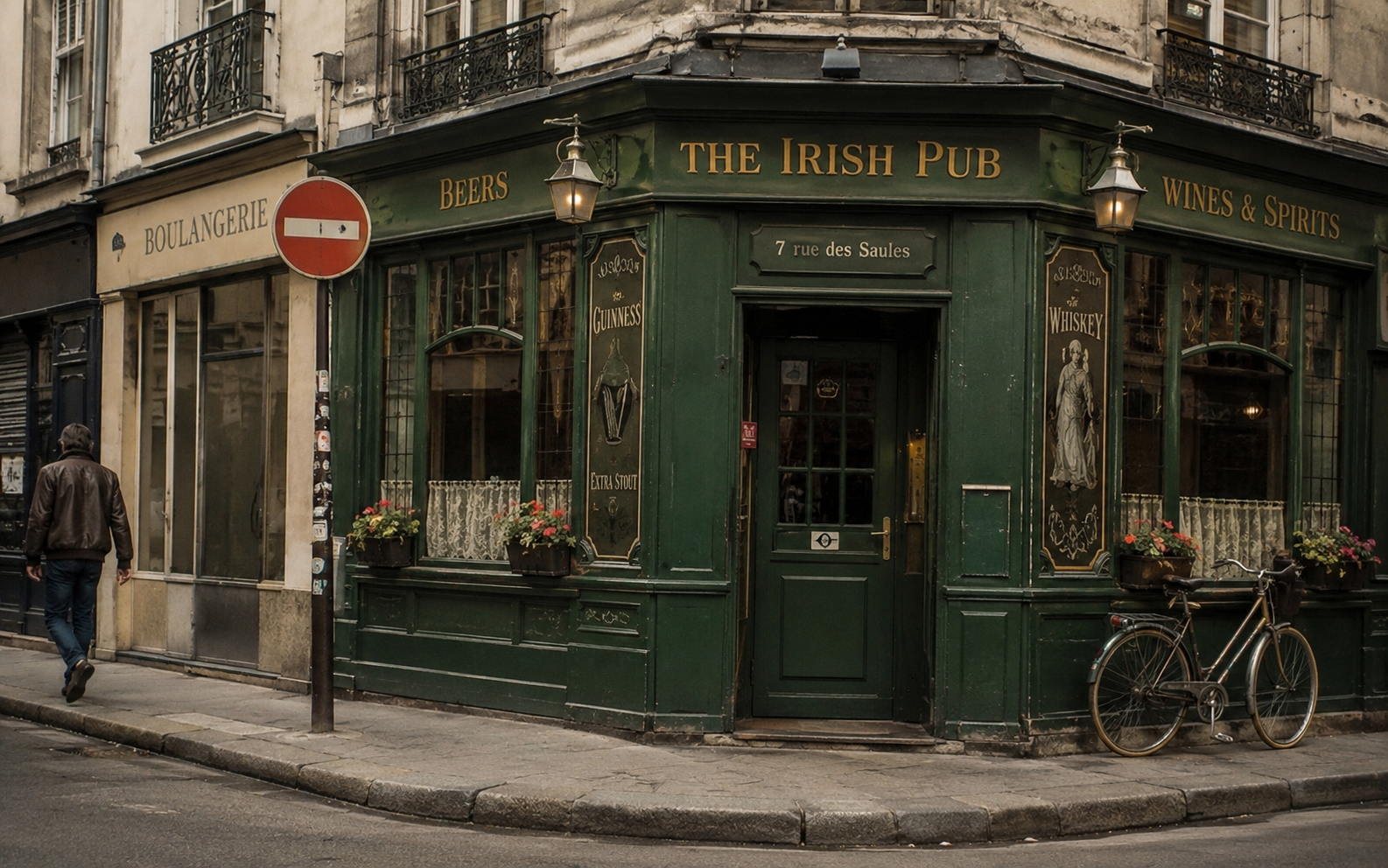
There are estimated to be more than seven thousand Irish pubs operating outside of Ireland. From the neon-lit streets of Tokyo to the colonial quarters of Sydney, the Irish pub has become a fixture of global nightlife in a way that no other national drinking culture has managed to replicate. But this did not happen overnight. The story of the Irish pub abroad is really the story of Irish emigration itself.
Emigration and the First Wave
The mass exodus from Ireland during and after the Great Famine of the 1840s planted the seeds for Irish pubs across the English-speaking world. In cities like New York, Boston, Liverpool and Melbourne, Irish communities gathered in pubs that served as informal embassies. These were not themed bars. They were genuine community hubs where newly arrived immigrants could find work, hear news from home and speak their own language without judgement.
By the late nineteenth century, Irish-run pubs were a defining feature of working-class neighbourhoods in dozens of cities. They were rough around the edges, built for function rather than decoration, and they played a crucial role in helping immigrants maintain their identity while adapting to new lives abroad.
The Irish Pub Company and the Global Boom
The modern era of the Irish pub abroad can be traced to a single company. In 1990, an Irish firm began designing and exporting flat-pack Irish pubs to locations around the world. The concept was straightforward. A bar owner in Dubai or Munich could order a complete pub interior, built in Ireland from reclaimed materials, shipped in a container and assembled on site in a matter of days.
The idea was wildly successful. Through the 1990s and early 2000s, Irish pubs appeared in countries that had never had a significant Irish population. The model worked because it sold an experience rather than a product. People did not go to these pubs because they wanted to be Irish. They went because the format offered something that other bars did not: warmth, conversation and a sense of belonging.
Authenticity and the Backlash
By the mid-2000s, the sheer number of Irish pubs had started to generate a backlash. Critics argued that many of these bars were hollow imitations, theme parks dressed in timber and Guinness memorabilia with no real connection to the culture they claimed to represent. Some of this criticism was fair. A pub built from a kit in a shopping mall in Singapore is not the same as a family-run bar in Galway that has been open for a century.
But the criticism missed something important. Even the most commercial Irish pubs tended to attract genuine communities. Expats, travellers and locals gathered in them because the format worked. The layout encouraged conversation. The music created atmosphere without drowning out talk. The pub, even in its most mass-produced form, retained something essential about the way people want to socialise.
The Next Chapter
Today, the best Irish pubs abroad have moved past the flat-pack model. A new generation of Irish publicans is opening bars that blend local culture with Irish traditions. In cities like Berlin, Melbourne and Toronto, you will find pubs that source local craft beers alongside Irish stouts, host live music that mixes trad with local genres, and build communities that reflect the diversity of their neighbourhoods rather than a nostalgic vision of Ireland.
The Irish pub abroad is no longer just a cultural export. It has become a living, evolving institution that belongs as much to the cities that adopted it as to the country that created it. And that, perhaps, is the most Irish thing about it.